Black Friday Homestead Win: Garlic, 18 Arborvitae Trees, and an Unexpected Garden Surprise

Yesterday was one of those days that reminds me why I’m building this life — not because everything went smoothly, but because it all came together in that imperfect way homesteading does.

I’d spent the morning driving Uber, bouncing between passengers and quiet moments alone in the car. My last drop-off of the day happened to be at Home Depot, and since I was already there, I decided to walk through the garden center. My original plan?

To look for materials to build a butterfly sculpture for the garden. The goal is to perfect the process so I can sell them. 

Colorado Springs is filled with public art — bright butterflies, metal horses, painted boxes, sculptures tucked into unexpected corners. It’s one of the things I love most about living here, and it’s been inspiring me to add more whimsical pieces to the homestead. So I walked toward the garden center out of habit, they have live Christmas trees, wreaths, and garland. I’ve wanted to grab some fresh garland so I thought I would take a look.

It was unusually warm for late November. A few display tables were pushed outside, something you don’t typically see this time of year. And that’s when I saw them:

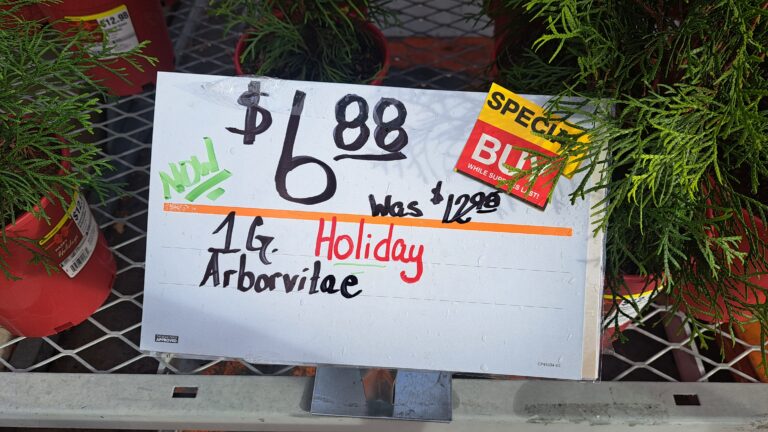
Emerald Green Arborvitae.
1-gallon containers.
Little red holiday pots.
Tied with red bows.
$6.88 each.

A handwritten Special Buy sign marked them down from $12.98. I still don’t know if these were leftover holiday trees or if the other stores had simply sold out — but I knew a deal when I saw one. Especially here in the mountains, where trees usually come at mountain prices.

So I grabbed 15, I should have bought the entire table.
Loaded them into the back of the SUV.
And felt like I’d just won the garden lottery.

These trees are the beginning of my natural fencing and berm design — the quiet green walls I’m building to create a more peaceful, sheltered property. Today I went back and bought the last 3. That puts me at 18 trees total, ready to overwinter until they’re big enough to plant without becoming deer snacks.

And the funny thing?
I didn’t even go there for trees.
I went because butterflies inspired me.

Sometimes creativity leads you exactly where you need to go.


🌱 The Garlic Race Against Dark

By the time I got home, the sun was already dropping behind the ridge. I knew the cold was coming, and I had garlic ready to plant — but most of the garden beds were frozen solid. I couldn’t dig in a single one.

Except the strawberry bed.

I had covered it earlier in the fall with frost cloth and thick straw, and that small bit of protection kept the soil soft and unfrozen. So I knelt down, used my gloved hands, and dug the holes one by one — no shovel needed.

Forty-five minutes later, under the glow of a headlamp and the last scraps of daylight, every clove was in the ground.

Not perfect.
Not planned.
But done.

That’s homesteading.
That’s mountain life.
That’s building an intentional life — one small victory at a time.


🌼 And One More Win: Marigold Seeds

On Wednesday evening, before the weather changed, I harvested the last of the marigold seeds. Today I sat and cleaned them, sorting each dry seed from the spent petals. It’s meditative work — slow, steady, grounding. The kind of work that reminds me why I’m doing all this in the first place.

Come spring, these seeds will explode into the bright color that makes this place feel alive.


🌲 What Comes Next

This week’s unexpected wins — from the butterfly sculpture idea to the arborvitae sale to the garlic race — reminded me of something simple:

When you follow your curiosity, everything else falls into place.

These 18 little trees are the beginning of my natural fencing, my berms, and the quiet sanctuary I’m building on this land. The garlic is tucked in for winter. The marigolds are ready for next season. And the butterfly sculpture?
That’s still coming.

One day soon, I’ll record an art walk and share some of the Colorado Springs sculptures that inspire this place — because they’re part of this story, too.

For now, I’m just grateful for warm days in November, unexpected sales, loose soil, and the small, steady steps of creating the life I want.

How to Start a CO Farm Stand: Grow, Sell, & Thrive on Less Than an Acre

A Simple Guide for Turning Your Homestead Skills Into Extra Income

If you’ve been dreaming about earning a little extra income from your kitchen, your garden, or your creativity, Colorado just happens to be one of the best states to do it. Two powerful opportunities make it possible:

Colorado House Bill 19-1191 — You can operate a farm stand on ANY size property, even if the land is not zoned agricultural.

Colorado Cottage Foods Act — You can make and sell certain low-risk homemade foods from your own kitchen without needing a commercial license.

Put them together?
You can create an income-producing micro-business right from home.

This article breaks everything down in clear, simple terms — so you can decide what to make, what to grow, how to sell it, and what’s legal.


🌻 Part 1: What the CO Farm Stand Law Actually Allows

Thanks to House Bill 19-1191, a farm stand is allowed on:

  • Any size parcel of land

  • Any zoning (residential included)

  • Any property where the “principal use” is something else (like a home)

This means you do not need a multi-acre property or special agricultural zoning to sell what you grow.

What You Can Sell at a Farm Stand

✔ Produce you grow on your property
✔ Eggs (with separate egg rules)
✔ Honey
✔ Herbs
✔ Flowers (fresh or dried)
✔ Compost or garden goods
✔ Agricultural products from nearby growers (if your county allows)

Farm stands help small growers, hobby gardeners, and homesteaders connect directly with the community — just like small-town Wisconsin-style produce stands where you might find tomatoes beside a loaf of homemade bread.

And that’s where Cottage Food comes in.

🍞 Part 2: Cottage Foods — What You Can Legally Make & Sell From Home

The Colorado Cottage Food Act allows you to prepare certain non-hazardous foods in your home kitchen and sell them directly to customers.

This is perfect for a farm stand, farmers market, porch pick-up, or local delivery.

Foods You CAN Sell

Baked goods (non-perishable)

  • Sourdough loaves

  • Focaccia (plain or herb — no tomatoes or cheese)

  • Rolls

  • Cookies

  • Muffins

  • Sweet breads

Canned or preserved foods

  • Fruit jams & jellies

  • Preserves

  • Fruit butters

  • Pickles (must meet pH rules)

Dry goods

  • Spice blends

  • Seasoning mixes

  • Soup mixes

  • Tea blends

  • Herbal infusions (dry only)

  • Popcorn

  • Dehydrated fruit

  • Nuts & seed mixes

  • Granola (no dairy/hazardous ingredients)

Confections

  • Candy

  • Brittles

  • Marshmallows

  • Chocolate-covered nuts or fruit (if shelf stable)

Foods You CANNOT Sell

  • Salsa (fresh or canned)

  • Fresh pesto

  • Refrigerated foods of any kind

  • Cream pies, cheesecakes, cream-filled baked goods

  • Meat, poultry, or fish products

  • Canned vegetables unless pickled and pH-tested

Colorado does not allow home-canned salsa because it is considered low-acid and high-risk.
But don’t worry — there are clever workarounds we’ll talk about next.

If you don’t live in Colorado, you can absolutely build a similar micro-farm business — you just need to check your state’s cottage food and farm stand laws. Every state has its own version of food-safety rules, allowed products, and selling locations. A good starting point is:

  • Your state’s Department of Agriculture

  • Your county Extension Office

  • The nationwide directory at Forrager.com, which tracks cottage food laws by state

  • Your local farmers market manager — they always know what’s allowed locally

No matter where you live in the U.S., there is almost always a legal way to sell produce, baked goods, preserves, dry mixes, spices, teas, starter plants, and other small-batch foods. You don’t need acres of land — you just need a plan, a little passion, and the willingness to start small.

🍂 Rethinking Fall Cleanup at Cheesecake Bear Ranch

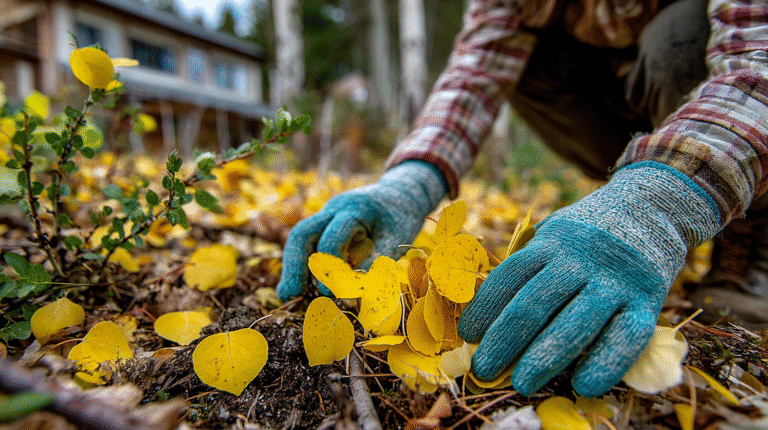
As the days grow shorter and the crispness of fall settles in, gardeners everywhere feel that old familiar pull: the great fall cleanup. Out come the rakes, the pruners, and the endless urge to “tidy up.” We trim, we cut, we sweep away every last leaf, convinced that neatness equals health.

But what if that instinct is backwards? What if the healthiest, most ecologically vibrant gardens are the ones that stay a little wild through winter? The truth is, the best fall gardening practices often look like less work, not more.

At Cheesecake Bear Ranch we’re learning to rethink cleanup with our plum trees, espaliered apple trees, tulip bulbs, strawberries, currants, jostaberries, lilacs, marigolds, and more.


1. Forget the Fall Cleanup: Let Your Garden Stay a Little Messy

It’s tempting to cut everything down to the ground. But leaving standing stems and seed heads can be a gift to wildlife.

  • Marigolds, zinnias, and cosmos: their dried flower heads are a banquet for finches and chickadees.
  • Garlic chives and borage: left to stand, their seed heads provide food for pollinators next spring.
  • Strawberry beds and currant canes: a light layer of leaves insulates their roots while sheltering beneficial insects and salamanders.

That “mess” of leaves isn’t waste. It’s mulch, habitat, and protection.


2. Put Down the Pruners (Until the Time is Right)

Pruning isn’t one-size-fits-all. Timing matters:

  • Lilacs bloom on last year’s wood. Cut them in fall and you’ll lose next spring’s show. Wait until they finish flowering.
  • Espaliered apple trees should be pruned in late winter while dormant, when you can clearly see the structure.
  • Plum trees are best pruned in mid- to late-summer to avoid disease pressure.

Resist the urge for fall “haircuts.” Your patience will be rewarded with blooms and healthier trees.


3. The Best Time to Plant is Now

Fall isn’t just cleanup time. It’s prime planting season.

  • Tuck in tulip and iris bulbs now for a burst of spring color.
  • Plant black lilies for dramatic accents that emerge in spring.
  • Establish jostaberries and currants in autumn while the soil is still warm. They’ll focus on root growth and explode with vigor in spring.

By planting now, you’re aligning with nature’s cycles. Roots establish quietly under cool soil while the tops rest for winter.


4. Treasure in Imperfect Produce

Maybe your plums split in the rain, or a bear “taste-tested” your strawberries. Don’t see them as failures. See them as seed stock.

  • Let those overripe marigold blooms dry fully for free seeds next year.
  • Save seeds from cosmos and zinnias for self-seeding beauty that costs nothing.
  • Even quirky fruit from your apple espalier can provide viable seed for grafting experiments or rootstock.

Imperfect produce can become tomorrow’s abundance.


5. Beware the Hand Cream Trap

When handling seeds, especially small ones like borage, marigolds, or garlic chives, avoid pouring them into your hand. Oils or lotions can coat the seed, blocking the water it needs to germinate. Use a clean envelope, spoon, or gloves.


🌱 The Thoughtful Gardener

A thriving garden isn’t about tidiness. It’s about intention. By letting your plum trees hold their shape until summer, your lilacs bloom in spring, your currants overwinter under leaves, and your bulbs rest beneath the soil, you’re gardening with nature, not against it.

So this fall, resist the urge to over-clean. Keep a little mess, a little wildness, and a lot of patience. You’ll discover that joy grows best when we align with the rhythms of life.

👉 What old garden “rule” are you ready to break this season at your homestead?