How to Price Farmstand Bouquets Without Undervaluing Your Flowers

If you grow flowers and have ever thought, “I should sell a few bouquets from my garden,” you are not alone.

There is something so satisfying about walking through the garden, cutting fresh blooms, tucking in herbs or greenery, and creating something beautiful enough for someone to take home and enjoy.

But then comes the hard part.

What do you charge?

That question seems simple, but the more you think about it, the more complicated it becomes.

Do you price based on what people in your area are used to paying?
Do you compare your bouquets to grocery store flowers?
Do you charge based on size?
Do you count each stem?
Do you include your time?
What about the filler, the wrap, the jar, the ribbon, the water, the seed-starting supplies, the compost, the months of growing, and the time it took to make it all look effortless?

That is exactly why I created my free Farmstand Bouquet Pricing Checklist.

You can grab the free download here:
https://mybackyardhomestead.com/product/free-farmstand-bouquet-pricing-checklist/

Why I Created This Checklist

I created this because I see so many gardeners, backyard growers, and small flower sellers underpricing their work.

And honestly, I understand why.

When you grow something yourself, it is easy to think of it as “just flowers from the garden.” You already had the plants. You already had the space. You were already outside working anyway.

But that mindset can quietly lead to giving away your time, skill, and resources for far less than they are worth.

A bouquet is not just a handful of flowers.

It includes:

  • The seeds, starts, bulbs, or plants
  • The soil amendments and compost
  • The water
  • The growing space
  • The months of care
  • The harvest timing
  • The filler and greenery
  • The vase, wrap, jar, or packaging
  • The design time
  • The cleanup
  • The experience and eye it takes to make the bouquet feel balanced and beautiful

Even a simple farmstand bouquet has more value than many people realize.

Farmstand Pricing Is Not Grocery Store Pricing

One of the biggest mistakes small growers make is comparing their bouquets to grocery store flowers.

Grocery store bouquets are produced at a massive scale. They often travel long distances, are priced for volume, and are designed to fit a completely different business model.

A farmstand bouquet is different.

It is local.
It is seasonal.
It is fresher.
It is often grown with more care.
It may include flowers and textures people cannot easily find in a store.
And it carries the story of the garden it came from.

That does not mean every farmstand bouquet needs to be expensive. But it does mean the price should reflect more than “what flowers cost at the grocery store.”

Start by Thinking About Stem Value

One habit I want more small growers to develop is thinking in terms of cost per stem and value per stem.

Not all flowers are equal.

A bouquet with zinnias, cosmos, mint, yarrow, and rudbeckia will price differently than a bouquet filled with ranunculus, roses, dahlias, peonies, lisianthus, or specialty snapdragons.

Some flowers are easy to grow in abundance. Others take more effort, more timing, more protection, or more investment.

When you start thinking about what each stem contributes to the bouquet, you begin to see the value more clearly.

For example:

A bouquet with mostly filler and easy-to-grow annuals might be priced as an affordable farmstand bouquet.

But a bouquet with roses, ranunculus, dahlias, snapdragons, or other premium blooms should not be priced the same way just because it is being sold from a porch, driveway, or small roadside stand.

The flowers matter.

The design matters.

Your time matters.

Do Not Forget the Supporting Flowers

Another thing I wanted to include in this checklist is the importance of supporting flowers and greenery.

It is easy to focus only on the “star” flowers, but the supporting stems are what make a bouquet feel full, balanced, and intentional.

Filler flowers, herbs, foliage, branches, seed pods, grasses, and texture all play a role.

They may not be the first thing someone notices, but they are often what make the bouquet feel abundant and special.

If you are growing lemon mint, yarrow, spirea, basil, oregano flowers, feverfew, cosmos, rudbeckia, or other supporting plants, those stems have value too.

They are not “free” just because they came from your garden.

Your Time Belongs in the Price

This is probably the part most small growers overlook.

Your time is part of the product.

It takes time to walk the garden and choose the right stems.
It takes time to harvest at the right stage.
It takes time to strip leaves, condition flowers, arrange the bouquet, wrap it, photograph it, label it, and put it out for sale.

Even if you enjoy doing it, your time still has value.

A bouquet is not just a product. It is the result of many small decisions and a lot of care.

That is why the checklist includes space to think about design time and handling, not just the flowers themselves.

A Simple Way to Build Confidence in Your Pricing

The goal of the Farmstand Bouquet Pricing Checklist is not to make pricing complicated.

It is meant to make pricing clearer.

Instead of guessing, you can quickly think through:

  • What flowers are included?
  • Are any of them premium stems?
  • How much filler or greenery did you use?
  • What supplies are involved?
  • How much time did it take to make?
  • Is the bouquet simple, medium, or premium?
  • Does the final price actually make sense?

This gives you a starting point.

You can still adjust based on your local market, your customers, your goals, and your season. But at least you are making that decision with more awareness.

Farmstand Bouquets Can Be Affordable and Still Be Fair

I love the idea of farmstand bouquets being accessible.

Not every bouquet needs to be a luxury florist arrangement. There is absolutely a place for simple $10, $15, or $20 bunches that bring beauty into someone’s home.

But affordable should not mean careless.

And it definitely should not mean pricing in a way that burns you out.

If you are selling flowers, even casually, it is worth learning how to price them in a way that respects your garden, your work, and your customer.

Good pricing helps you keep going.

It helps you plant more.
It helps you improve your setup.
It helps you buy better supplies.
It helps you decide what is worth growing again next year.
And it helps you build a small farmstand or backyard business that actually supports your life instead of draining it.

Download the Free Farmstand Bouquet Pricing Checklist

I created this free checklist as a simple tool for backyard growers, homesteaders, flower gardeners, and small farmstand sellers who want to price their bouquets with more confidence.

Whether you are selling from a roadside stand, a porch pickup table, a farmers market booth, or just offering a few bouquets to friends and neighbors, this guide will help you slow down and think through the real value of what you are creating.

Download the free Farmstand Bouquet Pricing Checklist here:
https://mybackyardhomestead.com/product/free-farmstand-bouquet-pricing-checklist/

I’ll be creating more free tools and resources for small growers, backyard homesteaders, and creative farmstand sellers, so be sure to check back often.

Because sometimes the difference between a hobby that drains you and a small income stream that supports you is simply learning how to value what you already grow.

5 Secrets for an easy Container Garden

From Flower Beds to Food: 5 Surprising Secrets for a High-Style, Low-Effort Container Garden

For the discerning homeowner, the transition from a manicured flower garden to a productive vegetable plot often feels like a stylistic compromise. There is a lingering, pervasive myth that “growing your own” is a purely utilitarian—and aesthetically lackluster—endeavor. However, the philosophy of the “Lazy Gardener” suggests that one need not choose between a curated harvest and a stunning outdoor space. By applying a design-led eye to functional horticulture, your vegetable containers can offer as much architectural interest and textural contrast as any prize-winning rose bed.
The secret lies in working with nature’s robustness rather than against it. Here are five surprising strategies to transform your patio into a “fabulous” and high-yielding edible sanctuary.

1. The “Buried Alive” Strategy for Architectural Stability

When transplanting, our instinct is to keep the plant at its original nursery level. However, for high-impact staples like potatoes and tomatoes, the most counterintuitive move—burying them “deeper than you might imagine”—is the key to a stocky, wind-resistant silhouette and a prolific yield.
When planting potatoes, fill your container only one-third full of soil. After placing your starts, cover them completely to the very top of the pot. As the expert guidance suggests:
“You’d think they’re like way down there and they’re sort of buried alive, but they’ll come all the way up and come right to the surface.”
This technique encourages massive stem development and ample room for tubers. To give them the “energy and boost” required for this rapid growth, mix in two handfuls of chicken manure pellets. Be warned: they are “a little bit foul” to the nose initially, but the scent dissipates the moment they are watered in, leaving only pure nutrient power behind.
Pro Tip: Tomatoes possess a unique biological secret: they produce adventitious roots anywhere the stem touches the soil. By burying the stem deep, you aren’t drowning the plant; you are creating a massive, sophisticated root system that results in a sturdier, more resilient plant.

2. The Aesthetic “Zhuzh”: Upcycling with High-Style Flair

A truly curated garden should never be defined by the “utility” of black plastic. The secret to an elevated look is aesthetic upcycling—transforming “found objects” into chic garden features.
To hide unappealing plastic, wrap pots in burlap (hessian) sacking secured with rustic twine. This provides an immediate “shabby chic” texture that complements a Mediterranean blue palette. Beyond the visual appeal, this is a vital “lazy” hack: the burlap shades the pot, preventing the soil from overheating. Cooler roots mean less water evaporation and less daily maintenance for you.

For more character, look to your shed or local vintage markets for:

 Old Tin Baths or Sinks: Perfect for a rustic-luxe focal point.
 Wicker Bread Baskets: Line these with permeable weed membrane (or more burlap) to prevent soil from escaping.
 Weathered Apple Boxes: Ideal for a cluster of strawberry plants.

3. Bespoke Soil: The Tailor-Made Approach

The most sophisticated gardeners know that soil is not “one size fits all.” To ensure your plants thrive with minimal intervention, you must provide a bespoke potting mix tailored to their specific biological origins.

Plant Type

Bespoke Mix Composition

Key Benefit

Leafy Greens & “Chocolate” Mint

Multi-purpose mix with chicken manure pellets.

Nitrogen-rich “oomph” for vibrant chartreuse and deep red foliage.

Mediterranean Rosemary

Soil mixed with coarse grit or “inert” gritty sand.

Prevents “wet feet” (root rot) by mimicking rocky, free-draining hillsides.

Peppers & Chilies

Light, airy mix using Coir (coconut fiber) and Perlite.

Creates a “fluffy,” aerated environment for delicate root systems.

By using coir and perlite for your peppers, you create a “fluffy” substrate that facilitates drainage and oxygen flow, which is essential for these sun-loving “goddesses.”

4. Designing the Visual Harvest: Checkerboards and Succession

To move away from the “all-green” utility look, use your crops as living design elements. One of the most effective methods for visual impact is Checkerboard Planting. Instead of rows, alternate contrasting leaf colors—pair a shocking green chartreuse oak leaf lettuce against a deep, moody red leaf variety.

Enhance this with Companion Planting. Interspersing Marigolds among your Tomato plants provides a stunning pop of orange against your blue pots, but it also serves a technical purpose: attracting hoverflies and other “pest predators” to keep your garden clean without chemicals.

To maintain this “fabulousness” into the autumn, practice Succession Sowing:

 The Segway Crop: As your early-season spinach begins to “bolt,” have Rainbow Chard seedlings ready to take over. Their multicolored mid-ribs glow when back-lit by the sun, offering “majestic” color long after the summer salad season has peaked.
 The Filigree Layer: Intersperse deep pots of Salad Carrots for their delicate, fern-like foliage, which adds soft texture to your container groupings.

5. The Lazy Gardener’s Luxury Maintenance Hacks

The hallmark of the Aesthetic Agronomist is achieving maximum results with minimum labor. Success is often a matter of strategic placement and simple observation.

 The Proximity Rule: Place your containers close to the house on a flat, sunny surface. If they are in your daily line of sight, you are more inclined to “tend and admire” them, ensuring they never fall into neglect.
 The Finger Test: Forget rigid watering schedules. Simply push your finger an inch or two into the soil. If it feels cool and moist, walk away. Only water when the soil feels dry at that depth.
 The Potato Mulch Hack: To lock in moisture and further reduce your watering chores, apply a mulch of dried grass clippings over your potato pots. It’s an effortless way to keep the potting mix cool and hydrated.
 The Two-Week Feed: Use a liquid tomato feed every two weeks for all fruiting plants—including strawberries and peppers. This replaces the nutrients exhausted by the plant and provides the “energy” needed for consistent flower and fruit production.

Conclusion: The Confidence of Small Starts

The most rewarding realization for any new gardener is that plants are “more robust than you imagined.” Gardening is not a pursuit of perfection; it is about finding your feet and witnessing the incredible resilience of “Mother Nature.”
Once you see your first vibrant chard leaf or sun-warmed strawberry appear, your confidence will grow alongside your harvest. Look around your home—what surprising, “shabby chic” container do you have sitting in your garage or shed right now that could be the centerpiece of your new high-style garden?

Why Growing Strawberries Matters More Than Ever

How a simple garden patch builds memories, community, and a stronger local food system

There’s a quiet kind of magic that happens when strawberries grow in your garden.

It’s not loud or flashy. It doesn’t announce itself.
It shows up barefoot, on a warm day, with red-stained fingers and berries eaten before they ever make it inside.

These are the moments that turn into family stories. The kind that get told years later, usually with a smile, and usually starting with, “Remember when we used to…”

Strawberries as Memory Keepers

Strawberries are often one of the first foods people remember growing or picking. They’re low to the ground, easy to reach, and generous. You don’t need special tools or years of experience. You just need to show up.

That accessibility matters.

When friends and family visit and wander into the strawberry patch, something shifts. Conversations slow down. People linger. Kids learn, without being taught, that food comes from care, patience, and attention.

These aren’t small things. They’re formative.

Growing Food Is About More Than Food

Growing strawberries isn’t just about the harvest. It’s about connection.

Connection to the land beneath your feet.
Connection to the people you share your space with.
Connection to knowledge that once lived in nearly every household.

For generations, growing food wasn’t a hobby. It was a shared responsibility. Somewhere along the way, we outsourced it almost entirely, and with that came distance — from the land, from seasons, and from each other.

Reintroducing even a small food patch into your yard begins to close that gap.

Backyard Gardens and Civic Responsibility

Growing food at home doesn’t mean going off-grid or doing everything yourself. It means participating.

A strawberry patch won’t replace a grocery store, but it does something just as important: it reinforces local resilience. When more households grow even a portion of their food, local food systems become stronger, more adaptable, and more human.

Seen this way, gardening becomes an act of civic responsibility.
Not driven by fear or scarcity, but by care.

Care for your family.
Care for your neighbors.
Care for the land that sustains all of us.

Why Strawberries Are the Perfect Place to Start

Strawberries are one of the most rewarding plants for home gardeners:

  • They’re perennial, returning year after year

  • They’re affordable to plant in meaningful quantities

  • They thrive in small spaces or dedicated patches

  • They produce quickly and generously

A common rule of thumb is about 10 plants per person for a real harvest. That’s enough to snack, share, and still have berries left for the kitchen.

But beyond yield, strawberries offer something less measurable and more enduring: joy.

Building Trust in a High-Tech World

We’re living in an age where technology, including AI, shapes much of what we see, read, and create. That makes credibility more important than ever.

Real experience.
Real place.
Real seasons.

At myBackyardHomestead, everything shared here is grounded in lived practice — growing food where I live, learning what works (and what doesn’t), and documenting the process as it unfolds.

Technology can help us learn faster and share more widely, but trust is built the old-fashioned way: through consistency, transparency, and connection to real life.

That’s what this space is about.

Bringing It Back Home

A basket of strawberries can feed more than bodies.

It feeds memory.
It feeds connection.
It feeds the kind of stories families carry forward.

If you’ve been thinking about starting a strawberry patch, there’s no better time. Planting strawberries is an invitation — to slow down, to participate, and to help rebuild local food systems one garden at a time.

Because growing food is not just about what we eat.
It’s about how we live, together.

Marigolds and Memories

This upcoming growing season, marigolds won’t just live in the borders or tuck themselves between vegetables. They’ll play a central role in our cut flower story.

Marigolds are true cut-and-come-again flowers, which makes them ideal for a small, intentional bouquet garden. The more you cut, the more they produce. With regular harvesting, a single planting can supply blooms steadily from early summer until frost — a rare quality in the flower world.

For bouquets, marigolds offer something many flowers don’t: structure, warmth, and reliability.

Why Marigolds Belong in Bouquets

  • Consistent production – dependable blooms week after week
  • Strong stems – especially in French and taller varieties
  • Rich, earthy colors – gold, amber, rust, and flame tones
  • Excellent filler or focal flowers – depending on the variety
  • Long garden season – keeps bouquets going when others slow down

They pair beautifully with zinnias, cosmos, sunflowers, herbs, and late-season greens. Even a few marigold stems can anchor a bouquet and give it a grounded, intentional feel.

How We’ll Be Growing Them for Cutting

When grown for cutting, marigolds are treated a little differently than typical bedding plants:

  • Planted with space to encourage branching
  • Harvested often, cutting down to a leaf node to trigger new growth
  • Never allowed to go to seed early, so energy stays on blooms
  • Succession planted, ensuring fresh plants as the season progresses

This approach turns marigolds from “just a garden flower” into a steady bouquet producer.

A Flower With Meaning

There’s also something deeply fitting about using marigolds in bouquets.

For us, they carry memory — of Grandma Ann, of shared seasons, of flowers planted with intention. Bringing marigolds into bouquets feels like extending that story outward, letting others take a small piece of that warmth home.

They’re not flashy or fragile.
They’re steady.
They show up.
They last.

That’s the kind of flower — and the kind of story — we want at the heart of our growing season.

Black Friday Homestead Win: Garlic, 18 Arborvitae Trees, and an Unexpected Garden Surprise

Yesterday was one of those days that reminds me why I’m building this life — not because everything went smoothly, but because it all came together in that imperfect way homesteading does.

I’d spent the morning driving Uber, bouncing between passengers and quiet moments alone in the car. My last drop-off of the day happened to be at Home Depot, and since I was already there, I decided to walk through the garden center. My original plan?

To look for materials to build a butterfly sculpture for the garden. The goal is to perfect the process so I can sell them. 

Colorado Springs is filled with public art — bright butterflies, metal horses, painted boxes, sculptures tucked into unexpected corners. It’s one of the things I love most about living here, and it’s been inspiring me to add more whimsical pieces to the homestead. So I walked toward the garden center out of habit, they have live Christmas trees, wreaths, and garland. I’ve wanted to grab some fresh garland so I thought I would take a look.

It was unusually warm for late November. A few display tables were pushed outside, something you don’t typically see this time of year. And that’s when I saw them:

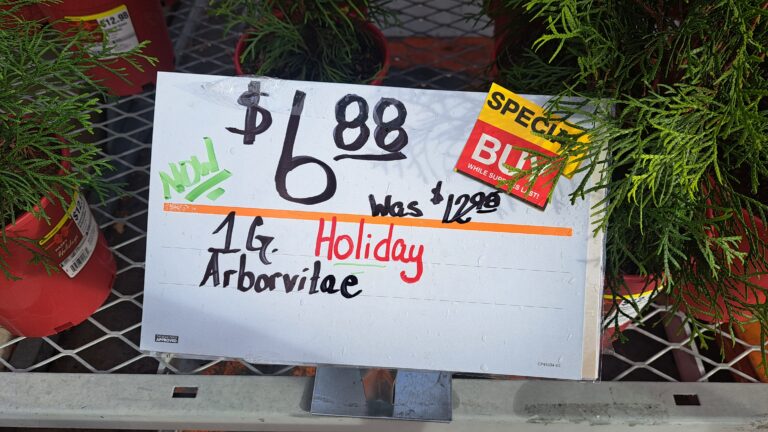
Emerald Green Arborvitae.
1-gallon containers.
Little red holiday pots.
Tied with red bows.
$6.88 each.

A handwritten Special Buy sign marked them down from $12.98. I still don’t know if these were leftover holiday trees or if the other stores had simply sold out — but I knew a deal when I saw one. Especially here in the mountains, where trees usually come at mountain prices.

So I grabbed 15, I should have bought the entire table.
Loaded them into the back of the SUV.
And felt like I’d just won the garden lottery.

These trees are the beginning of my natural fencing and berm design — the quiet green walls I’m building to create a more peaceful, sheltered property. Today I went back and bought the last 3. That puts me at 18 trees total, ready to overwinter until they’re big enough to plant without becoming deer snacks.

And the funny thing?
I didn’t even go there for trees.
I went because butterflies inspired me.

Sometimes creativity leads you exactly where you need to go.


🌱 The Garlic Race Against Dark

By the time I got home, the sun was already dropping behind the ridge. I knew the cold was coming, and I had garlic ready to plant — but most of the garden beds were frozen solid. I couldn’t dig in a single one.

Except the strawberry bed.

I had covered it earlier in the fall with frost cloth and thick straw, and that small bit of protection kept the soil soft and unfrozen. So I knelt down, used my gloved hands, and dug the holes one by one — no shovel needed.

Forty-five minutes later, under the glow of a headlamp and the last scraps of daylight, every clove was in the ground.

Not perfect.
Not planned.
But done.

That’s homesteading.
That’s mountain life.
That’s building an intentional life — one small victory at a time.


🌼 And One More Win: Marigold Seeds

On Wednesday evening, before the weather changed, I harvested the last of the marigold seeds. Today I sat and cleaned them, sorting each dry seed from the spent petals. It’s meditative work — slow, steady, grounding. The kind of work that reminds me why I’m doing all this in the first place.

Come spring, these seeds will explode into the bright color that makes this place feel alive.


🌲 What Comes Next

This week’s unexpected wins — from the butterfly sculpture idea to the arborvitae sale to the garlic race — reminded me of something simple:

When you follow your curiosity, everything else falls into place.

These 18 little trees are the beginning of my natural fencing, my berms, and the quiet sanctuary I’m building on this land. The garlic is tucked in for winter. The marigolds are ready for next season. And the butterfly sculpture?
That’s still coming.

One day soon, I’ll record an art walk and share some of the Colorado Springs sculptures that inspire this place — because they’re part of this story, too.

For now, I’m just grateful for warm days in November, unexpected sales, loose soil, and the small, steady steps of creating the life I want.

🍂 Rethinking Fall Cleanup at Cheesecake Bear Ranch

As the days grow shorter and the crispness of fall settles in, gardeners everywhere feel that old familiar pull: the great fall cleanup. Out come the rakes, the pruners, and the endless urge to “tidy up.” We trim, we cut, we sweep away every last leaf, convinced that neatness equals health.

But what if that instinct is backwards? What if the healthiest, most ecologically vibrant gardens are the ones that stay a little wild through winter? The truth is, the best fall gardening practices often look like less work, not more.

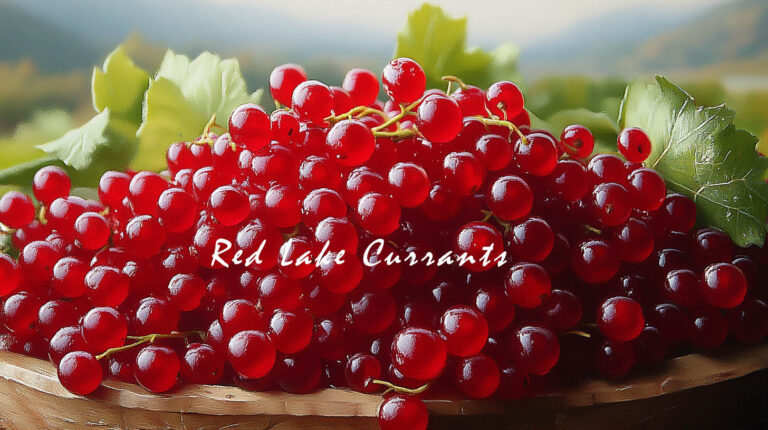
At Cheesecake Bear Ranch we’re learning to rethink cleanup with our plum trees, espaliered apple trees, tulip bulbs, strawberries, currants, jostaberries, lilacs, marigolds, and more.


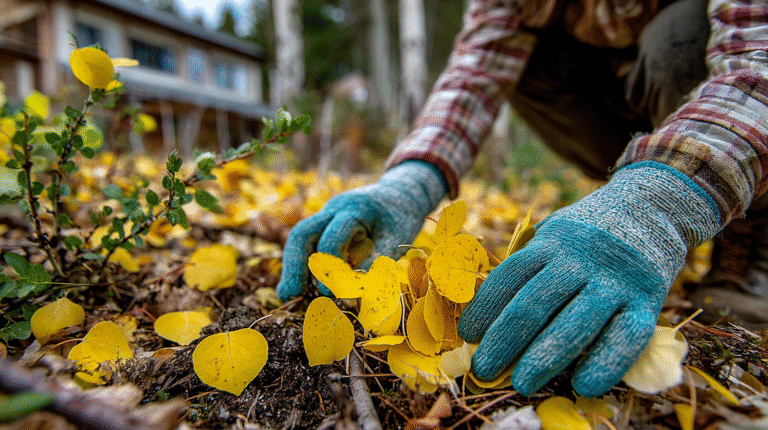
1. Forget the Fall Cleanup: Let Your Garden Stay a Little Messy

It’s tempting to cut everything down to the ground. But leaving standing stems and seed heads can be a gift to wildlife.

  • Marigolds, zinnias, and cosmos: their dried flower heads are a banquet for finches and chickadees.
  • Garlic chives and borage: left to stand, their seed heads provide food for pollinators next spring.
  • Strawberry beds and currant canes: a light layer of leaves insulates their roots while sheltering beneficial insects and salamanders.

That “mess” of leaves isn’t waste. It’s mulch, habitat, and protection.


2. Put Down the Pruners (Until the Time is Right)

Pruning isn’t one-size-fits-all. Timing matters:

  • Lilacs bloom on last year’s wood. Cut them in fall and you’ll lose next spring’s show. Wait until they finish flowering.
  • Espaliered apple trees should be pruned in late winter while dormant, when you can clearly see the structure.
  • Plum trees are best pruned in mid- to late-summer to avoid disease pressure.

Resist the urge for fall “haircuts.” Your patience will be rewarded with blooms and healthier trees.


3. The Best Time to Plant is Now

Fall isn’t just cleanup time. It’s prime planting season.

  • Tuck in tulip and iris bulbs now for a burst of spring color.
  • Plant black lilies for dramatic accents that emerge in spring.
  • Establish jostaberries and currants in autumn while the soil is still warm. They’ll focus on root growth and explode with vigor in spring.

By planting now, you’re aligning with nature’s cycles. Roots establish quietly under cool soil while the tops rest for winter.


4. Treasure in Imperfect Produce

Maybe your plums split in the rain, or a bear “taste-tested” your strawberries. Don’t see them as failures. See them as seed stock.

  • Let those overripe marigold blooms dry fully for free seeds next year.
  • Save seeds from cosmos and zinnias for self-seeding beauty that costs nothing.
  • Even quirky fruit from your apple espalier can provide viable seed for grafting experiments or rootstock.

Imperfect produce can become tomorrow’s abundance.


5. Beware the Hand Cream Trap

When handling seeds, especially small ones like borage, marigolds, or garlic chives, avoid pouring them into your hand. Oils or lotions can coat the seed, blocking the water it needs to germinate. Use a clean envelope, spoon, or gloves.


🌱 The Thoughtful Gardener

A thriving garden isn’t about tidiness. It’s about intention. By letting your plum trees hold their shape until summer, your lilacs bloom in spring, your currants overwinter under leaves, and your bulbs rest beneath the soil, you’re gardening with nature, not against it.

So this fall, resist the urge to over-clean. Keep a little mess, a little wildness, and a lot of patience. You’ll discover that joy grows best when we align with the rhythms of life.

👉 What old garden “rule” are you ready to break this season at your homestead?